


Option 1: Regular employee surveys and feedback sessions
Employee surveys are a proven way to gain insights into the overall mood, needs, and areas for improvement within the company.
When used correctly, they build trust and demonstrate appreciation.
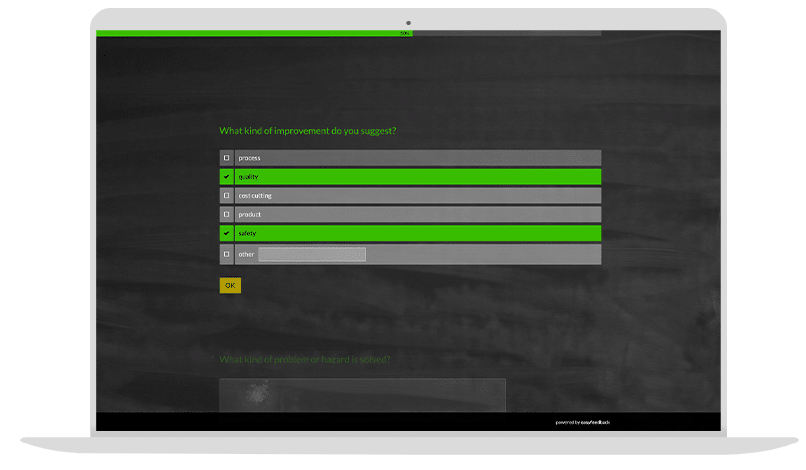
Best Practices:
- Ensure anonymity to encourage honest feedback.
- Establish a regular schedule: e.g., annual surveys combined with brief pulse surveys every three months.
- Make results transparent and develop concrete actions based on them.
- Close the feedback loop: Employees should know what happens with their feedback.

Option 2: Workshops and Idea Labs
Workshops provide a space for employee involvement — whether in change processes, the development of new products, or the improvement of internal processes.
Cross-functional groups, where different perspectives come together, are particularly effective.
Advantage: Employees are not only heard, but also actively involved in shaping the process.
Option 3: Participatory decision-making
In certain areas, it may be beneficial to make decisions collectively or, at the very least, to involve employees.
This can be done through voting, focus groups, or committees—for example, when introducing new tools or restructuring work schedules.
Tip: Clear communication guidelines and transparent processes are essential for managing expectations.
Option 4: Mentoring and Peer Coaching

Inclusion means not only having a say, but also sharing responsibility.
Mentoring programs and peer coaching foster a culture of learning from one another and mutual support.
Employees see themselves as an active part of the development process — not only of the company, but also of their colleagues.
Option 5: Employee-led initiatives and self-organized groups
Encourage employees to launch their own initiatives — whether on professional topics, sustainability, diversity, or social projects.
These groups foster a sense of identification with the company and strengthen the sense of community.
Conclusion
Employee participation is not just a “nice-to-have,” but a critical factor for success.
Whether through structured surveys, creative workshops, or self-organized initiatives—any organization that enables employees to truly participate creates a productive, innovative, and loyal work environment.
The key point here is that participation must be taken seriously, well-supported, and implemented in a sustainable manner.