


Objectives of requirements gathering
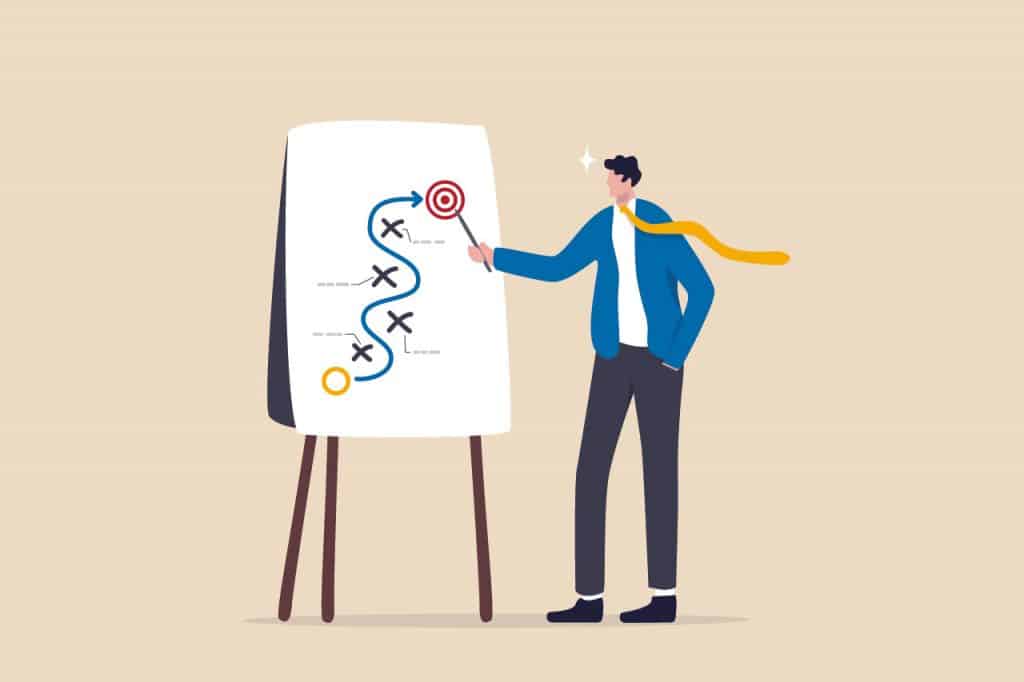
Before selecting methods, it should be clear what the requirements analysis is intended to achieve:
- Identify needs and expectations
- Define functions and performance characteristics
- Uncover conflicts between stakeholders
- Create a clear, understandable basis for later development
Classic methods of requirements analysis
1st method: Interviews
One-on-one interviews with stakeholders, users, or experts for structured information gathering.
There are:
- Standardized interviews (fixed list of questions)
- Guided interviews (semi-structured)
- Free interviews (open and exploratory)
Advantages: Direct exchange, individual in-depth discussion possible


Disadvantages: Time-consuming, possibly subjective
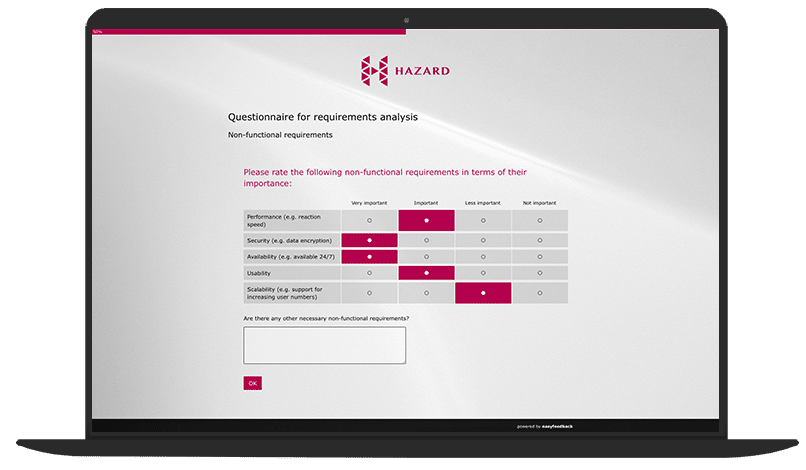
2nd method: Questionnaires
Standardized survey of a larger target group.
Suitable for quantitative evaluation.
Advantages: Wide reach, comparable data

Disadvantages: No follow-up questions, less depth
3rd method: Workshops
Group events where stakeholders discuss and prioritize requirements together.
Often with moderation and visualization methods (e.g., cards, whiteboards).
Advantages: Promotes consensus, incorporates many perspectives.

Disadvantages: Preparation and moderation are time-consuming.
4th method: Observation
Analysis of real work processes directly on site.
Particularly helpful when users are unable to clearly articulate their needs.
Forms: Participatory or non-participatory observation
Advantages: Real insights, independent of verbal expression skills

Disadvantages: Interpretation by observers required
5th method: Document analysis

Evaluation of existing documents such as process documentation, specifications, or contracts.
Advantages: Objective basis, good complement to other methods

Disadvantages: Often outdated or incomplete
Modern and agile methods
1st method: Use cases & user stories
Scenarios and short narratives describe how a user interacts with the system.
Advantages: Practical, easy to understand, especially in agile projects
Disadvantages: Requires experience in formulation and prioritization
2nd method: Personas

Fictitious but realistic user profiles that describe typical needs and behavior patterns.
Advantages: User-centered perspective, facilitates empathy

Disadvantages: Risk of stereotyping if not developed carefully
3rd method: Prototyping
Early, often incomplete models or mock-ups of a system to gather feedback.
Advantages: Visual representation, iterative refinement

Disadvantages: Not every requirement can be represented visually
4th method: Brainstorming & Design Thinking
Creative, often interdisciplinary methods for collaboratively developing solutions and requirements.
Advantages: Promotes innovation, broad perspective

Disadvantages: Can become arbitrary or inefficient without a clear structure
Selecting the right method
The appropriate method depends on factors such as:
- Project phase: Early phase = exploratory methods, later = more precise methods
- Number and availability of stakeholders
- Complexity of the system or product
- Time and resource budget
In practice, a mix of methods has proven successful: e.g., interviews + workshops + prototyping.
Conclusion
Requirements analysis is a key task for project success.
Whether classic or agile, it is crucial that the chosen methods are appropriate for the objectives, project context, and stakeholders.
Those who rely on a balanced mix of methods and take into account both functional and emotional user needs create a solid foundation for successful solutions.