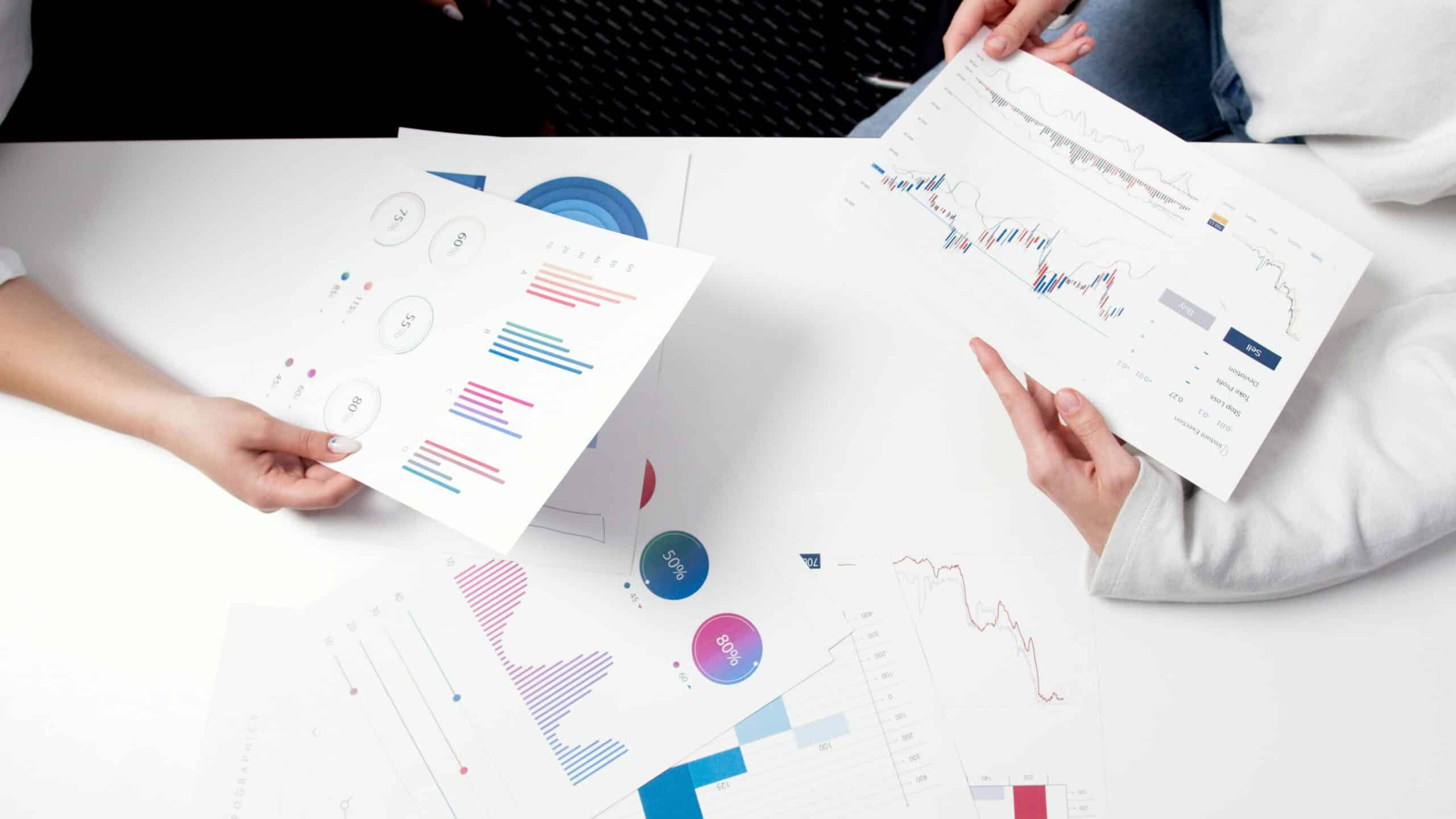


What is a trend analysis?
A trend analysis is a systematic process for identifying, evaluating, and interpreting changes and developments in various areas, such as society,
Technology, the economy, or the environment.
The aim is to use past and present data to make predictions about possible future developments.
Procedure for creating a trend analysis
A trend analysis is created in several clearly defined steps:
Step 1: Defining the objective

Before beginning the analysis, it must be clear what you want to achieve.
Is it product development, strategic planning, or market research?
The goal has a significant influence on what data is collected and how it is interpreted.
Step 2: Gathering information
In this step, relevant data and information are collected.
Sources can include:
- Trade journals, studies, and reports
- Expert interviews
- Surveys
- Observations on social media
- Market and consumer data
- Technology radar and innovation portals

Step 3: Identification of weak signals
Weak signals are the first signs of a possible trend.
They are often inconspicuous, but when interpreted correctly, they can indicate major changes.
Early detection of such signals is crucial.
Step 4: Categorization and clustering
Similar observations are grouped together to identify patterns.
These clusters can provide initial indications of emerging megatrends, macrotrends, or microtrends:
- Megatrends: long-lasting, global developments (e.g., digitalization, urbanization)
- Macrotrends: more specific developments within a megatrend
- Microtrends: short-term, often local phenomena
Step 5: Evaluation and prioritization
Not every trend is relevant for every organization.
The identified trends are therefore evaluated according to relevance, probability of occurrence, and impact.
Step 6: Scenario development
The identified trends can be used to develop various future scenarios.
These scenarios help companies to prepare flexibly for possible developments.
Step 7: Strategic conclusions
In the final step, concrete recommendations for action are formulated:
- What opportunities arise?
- What risks can be expected?
- What measures should be taken?

Conclusion: From trend to action
A well-founded trend analysis is more than just a gimmick for those enthusiastic about the future.
It is a strategic tool that helps companies respond to changes at an early stage, identify innovation potential, and position themselves sustainably in the market.
Those who read the signs of the times correctly can not only keep pace with the future—they can actively shape it.
In a world that is constantly changing, orientation is worth its weight in gold.
Trend analysis provides this orientation — well-founded, structured, and forward-looking.
Use it like binoculars to look into the future — and keep an eye on the big picture.