

1st method: Desk research
One of the most basic methods is secondary research or desk research.
This involves using existing data sources such as industry reports, market studies, company annual reports, or publications from associations.
This method is particularly cost-effective and provides an initial overview of market sizes, growth trends, and competitive landscapes.
However, it rarely provides deep insights into customer motivation or the behavior of individual players.
2nd method: Surveys
Surveys are a direct method of obtaining well-founded information.
They allow companies to collect specific data from customers, suppliers, or even competitors.
Online market research surveys, telephone interviews, or face-to-face conversations can provide quantitative and qualitative insights.
Surveys can be used to analyze customer satisfaction, purchasing behavior, or gaps in demand — information that often makes the decisive difference in strategic decisions.

3rd method: Porter’s Five Forces
Another proven model is Michael Porter’s analysis of the five competitive forces: the bargaining power of suppliers and customers, the threat of new market entrants, the threat of substitute products, and rivalry among existing competitors.
This method helps to assess the attractiveness of an industry and derive strategic fields of action.
4th method: SWOT analysis
SWOT analysis is a classic tool for industry analysis.
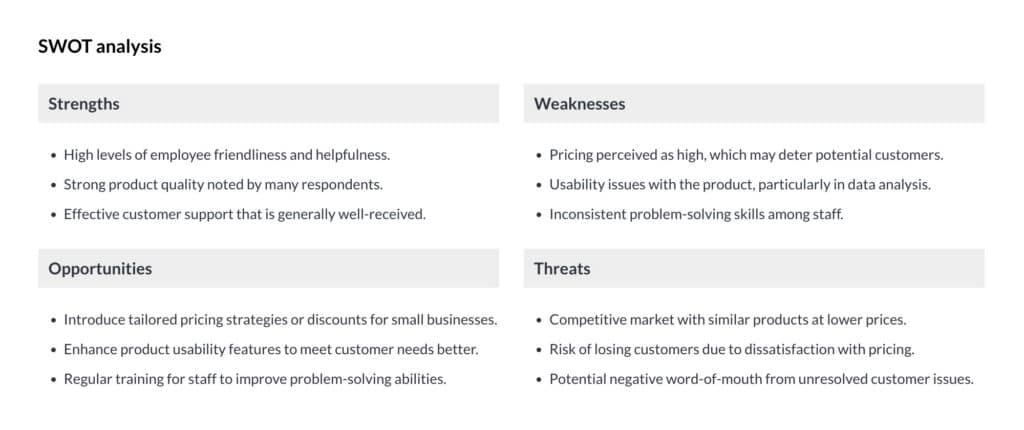
It considers the company in the context of the industry and examines both internal factors (strengths and weaknesses) and external factors (opportunities and risks).
The method enables informed strategic decisions to be made, such as which market niches are particularly attractive or which weaknesses should be offset through cooperation or investment.
5th method: Benchmarking
Benchmarking compares your own products, processes, or services with those of the leading companies in the industry.
The aim is to identify best practices and recognize potential for optimization.
Benchmarking is particularly helpful for realistically assessing your own competitive position and uncovering potential for innovation.
Conclusion
A sound industry analysis is not a one-time task, but a continuous process.
The combination of different methods — from the evaluation of existing data and surveys to models such as SWOT or Porter’s Five Forces — provides a comprehensive picture of the market.
Companies that use these methods in a targeted manner not only recognize opportunities early on, but can also minimize risks and strengthen their strategic position in the long term.
Ultimately, those who understand the market can actively shape it instead of merely reacting to changes.