


Why KPIs Are essential for events
Events require budget, time, and staff.
At the same time, event organizers face pressure to justify their actions to management or clients.
KPIs help with the following:
- Demonstrating success
- Identifying weaknesses
- Optimizing events in a targeted manner
- Planning budgets more effectively
- Making ROI visible
In short: Measurement leads to improvement.
Key KPIs by Event Format
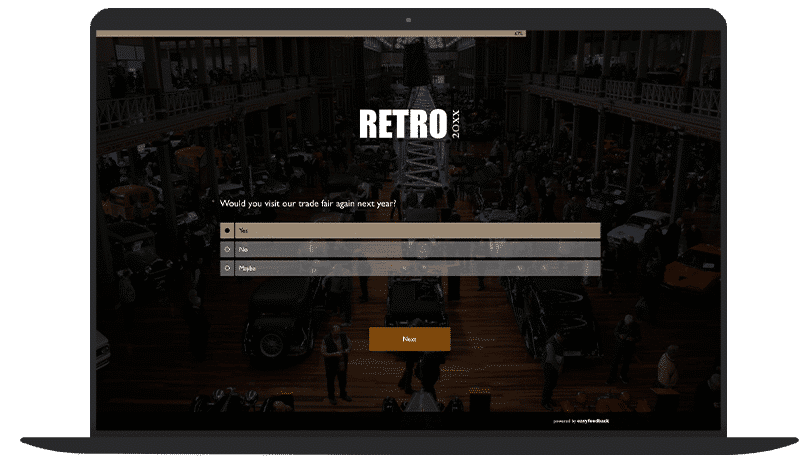
Trade Shows & In-Person Events
The primary focus here is on business impact.
Key KPIs:
- Number of booth visitors
- Leads and contacts generated
- Qualified conversations
- Scheduled appointments
- Cost per lead
- Deals closed after the trade show
Goal: Measurable sales success and reach.
Seminars & Workshops
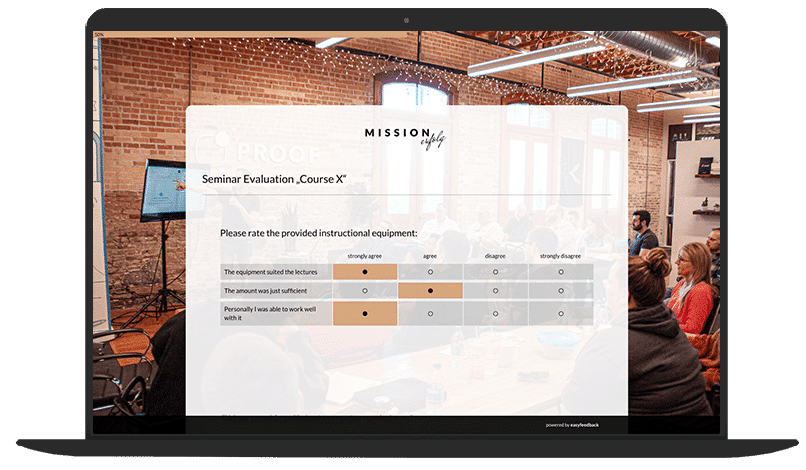
When it comes to learning formats, knowledge transfer and satisfaction are what matter most.
Key KPIs:
- Number of participants & no-show rate
- Active participation
- Learning success / knowledge test
- Practical applicability
- Satisfaction with trainer & content
- Recommendation rate
Goal: sustainable skill development rather than mere attendance.
Digital & Hybrid Events
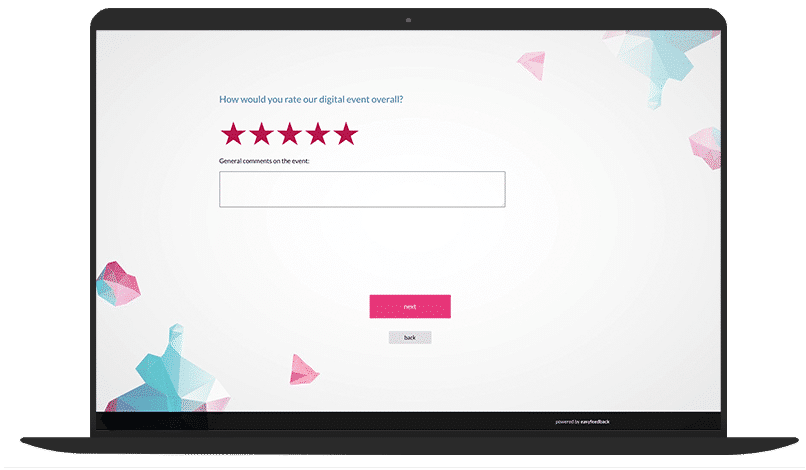
Digital formats provide a particularly large amount of measurable data in real time.
Key KPIs:
- Registrations vs. actual attendance
- Time spent on the event
- Clicks & interactions
- Chat and Q&A activity
- Downloads
- Drop-off rates
Goal: Maximize engagement and digital reach.
Feedback: The Qualitative Complement to Hard Numbers
Numbers show what happened — feedback explains why.
That’s why qualitative metrics should always be supplemented by:
- Satisfaction ratings
- Open-ended comments
- NPS (Net Promoter Score)
- Suggestions for improvement
Much of this data can be easily collected via QR code or link immediately after the event.
With tools like easyfeedback, event organizers can quickly create surveys, automatically analyze the results, and generate clear reports.
This turns opinions into measurable insights — without any extra effort.

Best Practices for Successful KPI Tracking
To ensure that metrics truly add value:
- Define goals before the event
- Select appropriate KPIs for each event format
- Combine quantitative and qualitative data
- Gather feedback immediately after the event
- Compare and optimize results
Less is often more: Focus on the metrics that are truly relevant to decision-making.
Conclusion
Whether it’s a trade show, seminar, workshop, or digital event — success is no accident; it’s measurable.
With the right KPIs, events transform from one-time experiences into strategic tools for marketing, sales, and professional development.
Those who use data intelligently and systematically collect feedback can sustainably improve quality, efficiency, and impact.
Because in the end, what matters is not the event itself — but the impact it creates.
More on the topic of event and seminar surveys
- How to plan your next seminar with a survey
- The ideal structure of a seminar evaluation with a feedback sheet
- 10 ways to get feedback on your seminar
- 5 tips for evaluating your seminar feedback
- When is the best time to gather feedback on an event or seminar?
- 10 tips for hybrid events
- 5 creative ways to enhance the attendee experience at events