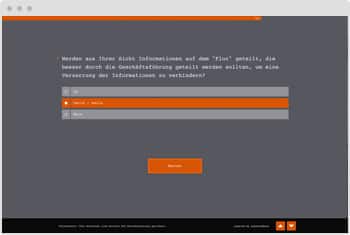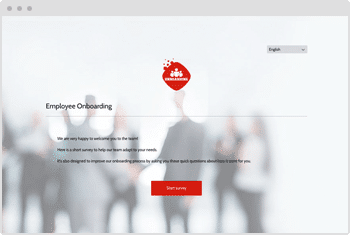

Conduct cultural analysis easily and effectively with targeted surveys

Conduct a cultural analysis with a survey

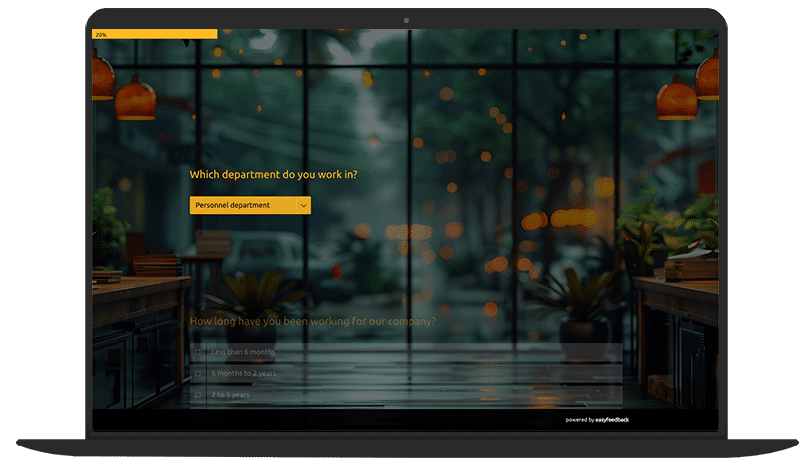
With this ready-made survey template, you can identify strengths and weaknesses in the existing culture in order to initiate targeted measures to improve the working environment and employee satisfaction.

Immobilienscout 24 ist begeisterter easyfeedback Nutzer

“Identifying user needs is at the heart of our business. easyfeedback has been helping us with this task for several years now. We particularly appreciate its intuitive usability and professional support.”

Franziska Becker
Guild Lead User Experience Research
TUI ist begeisterter easyfeedback Nutzer

“We use easyfeedback for internal and external surveys—it’s fast, convenient, and easy! The uncomplicated and friendly support puts a smile on our faces, and we are delighted with the continuous development of the platform.”

Jennifer Fischer
Guest & Competitor Insights Analyst

Why are regular cultural analyses important?

A cultural analysis within a company offers numerous advantages that influence both its strategic orientation and daily interactions.

It reveals which values, norms, and behaviors are actually practiced and how employees think, act, and communicate.

This is particularly valuable in times of strategic change and helps to identify cultural barriers.

It also supports managers in making authentic decisions in line with corporate values.

A targeted cultural analysis strengthens the sense of belonging and increases the attractiveness of the company for new talent looking for a suitable working environment.

Contents of the template:

  • Questions about demographics
  • Questions about corporate culture
  • Questions about communication
  • eNPS survey

Objectives of the survey:

Helpful features for the survey:

  • Survey options: Anonymous, partially anonymous, personalized
  • Invitation options: Link, email, QR code, and more
  • AI analysis of results, including recommendations for action
DSGVO-konforme Online-Umfragen

Data protection „made in Germany“ (GDPR)

Anonyme Teilnahme an Umfragen

Anonymity function for honest feedback

Frequently asked questions about cultural analysis

Cultural analysis is the systematic process of examining an organization’s or social system’s values, norms, beliefs, behaviors, and practices in order to understand its culture.

It aims to identify the implicit and explicit aspects of the culture that shape the behavior of its members, influence decision-making, and determine how an organization operates and develops.

A cultural analysis is often conducted to determine how well the existing culture aligns with the organization’s strategic goals and to identify barriers or opportunities for implementing change.

It can help strengthen the organization’s cultural strengths and identify areas where change is necessary to improve efficiency, engagement, and the satisfaction of members or employees.

1. Aspect: Values and Beliefs

Examination of the core values and beliefs that guide thinking and behavior within the organization.

2. Aspect: Norms and Rules

Analysis of the formal and informal rules that govern behavior within the organization.

3. Aspect: Symbols and Rituals

Consideration of the symbols, rituals, and traditions that exist within the organization and have particular significance.

4. Aspect: Communication Patterns

Examination of how communication takes place within the organization, including information flow and transparency.

5. Aspect: Leadership Style and Power Structures

Analysis of the relationship between managers and employees, as well as decision-making processes and the distribution of power.

To analyze organizational culture, there are a number of established models that help systematically capture and understand the cultural characteristics of an organization.

These models provide a structured approach to analyzing and interpreting cultural values, norms, and behaviors.

Here are some of the most well-known models for cultural analysis:

1. Model: Schein’s Three-Level Model of Organizational Culture

  • Description:
    This model was developed by Edgar Schein and describes organizational culture on three levels:

      • Artifacts: Visible structures and processes, such as clothing, office design, rituals, and language.
      • Values and Norms: Shared beliefs and rules that guide the behavior of organizational members, such as teamwork and innovation.
      • Basic Underlying Assumptions: Invisible, deeply rooted beliefs that are often unconscious, such as assumptions about human nature and the relationship with the environment.
  • Goal:
    These levels help to understand why people within the organization behave in certain ways.
  • Advantage:
    Provides an in-depth analysis and enables the identification of underlying assumptions that influence behavior.

2. Model: Competing Values Framework (CVF)

  • Description:
    The Competing Values Framework (CVF) is a model that categorizes organizational cultures into four quadrants:

      • Clan Culture: Focuses on collaboration, teamwork, internal flexibility, and a people-oriented approach.
      • Adhocracy Culture: Innovative, dynamic, experimental, risk-taking, and externally focused.
      • Market Culture: Competitive, performance-driven, results-oriented, and focused on external market demands.
      • Hierarchy Culture: Structured processes, control, stability, and internal efficiency.
  • Goal:
    Positioning the organizational culture within these quadrants makes it possible to identify cultural strengths and areas for development.
  • Advantage:
    Provides a clear and easy-to-understand analysis of an organization’s cultural orientation.


3. Model: Cultural Web by Johnson and Scholes

  • Description:
    The Cultural Web describes six elements that together form organizational culture:

      • Stories: The stories told within the organization that reflect its values and norms.
      • Symbols: Visible aspects such as logos, offices, and dress codes that represent the culture.
      • Power Structures: Who holds power within the organization and how it is exercised.
      • Organizational Structures: Formal and informal hierarchies and communication channels.
      • Control Systems: Evaluation and reward systems that influence employee behavior.
      • Rituals and Routines: Everyday behaviors and activities that are common within the organization.
  • Goal:
    To create a comprehensive picture of organizational culture that considers both visible and invisible elements.
  • Advantage:
    Helps identify hidden cultural barriers and obstacles to change.


4. Model: Hofstede’s Cultural Dimensions

  • Description:
    Geert Hofstede developed a model for analyzing national and organizational cultures based on six dimensions:

      • Power Distance: The extent to which unequal power relationships are accepted.
      • Individualism vs. Collectivism: The degree to which individual or collective goals are prioritized.
      • Masculinity vs. Femininity: Focus on competition and achievement (masculinity) versus quality of life and care (femininity).
      • Uncertainty Avoidance: The degree of tolerance toward uncertainty and risks.
      • Long-Term vs. Short-Term Orientation: Focus on long-term goals or short-term achievements.
      • Indulgence vs. Restraint: The extent to which enjoyment and pleasure are accepted and encouraged.
  • Goal:
    Understanding cultural differences and their influence on work practices and leadership styles.
  • Advantage:
    Useful for internationally operating companies to understand intercultural differences.


5. Model: Denison Organizational Culture Model

  • Description:
    The Denison Model is based on four key characteristics of organizational culture that influence organizational success:

      • Mission: Clear goals, vision, and direction.
      • Adaptability: The ability to respond to changes in the market environment.
      • Involvement: Employee participation and engagement in decision-making processes.
      • Consistency: Shared values, beliefs, and coordinated actions.
  • Goal:
    Determining how well the organizational culture aligns with achieving strategic objectives.
  • Advantage:
    A practical model for connecting culture with organizational performance.


6. Model: McKinsey 7-S Model

  • Description:
    The McKinsey 7-S Model examines seven elements that are critical for organizational performance:

      • Strategy: The plan for achieving organizational goals.
      • Structure: The organizational structure and hierarchy.
      • Systems: The daily activities and procedures used to implement the strategy.
      • Style: The leadership style and the way managers interact.
      • Shared Values: The core values that shape organizational culture.
      • Skills: The abilities and competencies of employees.
      • Staff: Human resource management and employee policies.
  • Goal:
    Evaluating how well the different elements of the organization are aligned and contribute to the desired culture.
  • Advantage:
    Provides a comprehensive view of the interdependencies within an organization.

For cultural analysis in companies, there are a variety of methods aimed at understanding the values, beliefs, behaviors, and norms within an organization.

These methods help analyze and evaluate the organizational culture in order to identify strengths and weaknesses and implement targeted improvements.

Here are some of the most common methods:

1. Method: Employee Surveys and Questionnaires

  • Description: Structured questionnaires distributed to all employees to capture their opinions and perceptions of the organizational culture.
  • Goal: To collect quantitative and qualitative data on employee satisfaction, communication, collaboration, and other cultural aspects.
  • Advantage: Provides measurable and comparable data that can be easily evaluated.


2. Method: Interviews and Focus Groups

  • Description: In-depth personal conversations with individuals (interviews) or groups (focus groups) to gain detailed insights into the organizational culture.
  • Goal: To gain a deeper understanding of employees’ subjective experiences and opinions.
  • Advantage: Allows complex topics to be explored and misunderstandings to be clarified immediately.


3. Method: Observation of the Work Environment (Ethnographic Analysis)

  • Description: Direct observation of employees in their daily work environment to analyze behaviors, interactions, and the overall working atmosphere.
  • Goal: To identify unwritten rules, routines, and dynamics within teams or the organization.
  • Advantage: Often reveals unconscious behavior patterns that are not captured through surveys.


4. Method: Analysis of Internal Communication Channels

  • Description: Examination of emails, chat conversations, meetings, internal social networks, and other communication channels within the organization.
  • Goal: To understand how information is exchanged, how transparent communication is, and which topics are prioritized.
  • Advantage: Provides insights into actual communication patterns and hierarchies, not only officially communicated information.


5. Method: Document Analysis

  • Description: Analysis of official documents such as company policies, mission statements, organizational structures, employee handbooks, and internal reports.
  • Goal: To identify explicitly stated values and norms and compare them with actual employee behavior.
  • Advantage: Reveals potential differences between the desired culture and the actual culture.


6. Method: Culture Workshops and Group Discussions

  • Description: Interactive workshops in which employees share their perceptions of the organizational culture and jointly develop solutions.
  • Goal: To use a participative approach that actively involves employees in the cultural analysis process.
  • Advantage: Encourages dialogue and participation across all hierarchical levels.


7. Method: Organizational Diagnostic Tools

  • Description: Standardized instruments and models for measuring organizational culture, such as the OCAI, which is based on the Competing Values Framework.
  • Goal: To enable a clear classification and categorization of the company’s culture.
  • Advantage: Provides a structured and scientifically based analysis of organizational culture.


8. Method: Employee Net Promoter Score (eNPS)

  • Description: A simple question asking how likely employees are to recommend the company as an employer, combined with a rating scale from 0 to 10.
  • Goal: To measure overall employee satisfaction and loyalty.
  • Advantage: Quick to implement and easy to evaluate; provides a useful overview of employee satisfaction.


9. Method: 360-Degree Feedback

  • Description: A systematic feedback process consisting of evaluations from colleagues, supervisors, and direct reports.
  • Goal: To gain a comprehensive picture of perceptions and interactions within the organization.
  • Advantage: Makes it possible to identify cultural patterns from different perspectives.


10. Method: Analysis of Employee Turnover and Exit Interviews

  • Description: Investigation of employee resignation reasons through structured exit interviews.
  • Goal: To gain insights into cultural weaknesses and problematic areas within the company.
  • Advantage: Provides honest feedback from departing employees, which is often particularly valuable.


11. Method: Social Network Analysis (SNA)

  • Description: Analysis of internal social networks and relationships within the company by examining communication patterns and informal networks.
  • Goal: To identify how information and decision-making processes spread throughout the organization.
  • Advantage: Identifies key individuals and informal leaders within the organizational culture.

Here are some questions for a questionnaire on cultural analysis that cover various aspects of organizational culture.

The questions are divided into categories to address topics such as communication, values, leadership, work environment, collaboration, and willingness to innovate.

The questions are designed to include different question types (Likert scales, multiple-choice questions, and open-ended questions) to enable a detailed analysis.

1. Category: Communication

  • How well informed do you feel about the goals and strategies of our company?
    (Likert scale)
  • How open and transparent is communication within your team?
    (Open-ended question)
  • Do you feel that you can express your opinions freely without having to fear negative consequences?
    (Likert scale)


2. Category: Values and Norms

  • Which values do you consider to be the most important within our company?
    (Multiple-choice question)
  • To what extent do the company’s actions reflect the values it communicates?
    (Likert scale)


3. Category: Leadership and Management

  • How would you describe the leadership style within your team?
    (Multiple-choice question)
  • To what extent does your supervisor support the professional development and growth of team members?
    (Likert scale)
  • How often do you receive constructive feedback on your work?
    (Multiple-choice question)


4. Category: Work Environment and Collaboration

  • How would you describe the working atmosphere within your team?
    (Open-ended question)
  • Do you feel supported by your colleagues in your daily work?
    (Multiple-choice question)
  • How would you evaluate your work-life balance within the company?
    (Multiple-choice question)


5. Category: Innovation Readiness

  • To what extent does the company encourage innovation and creativity?
    (Multiple-choice question)
  • Do you feel encouraged to present new ideas and suggest improvements?
    (Multiple-choice question)
  • What obstacles do you see to implementing new ideas within our company?
    (Open-ended question)


6. Category: Engagement and Motivation

  • How motivated do you feel working in our company?
    (Multiple-choice question)
  • What motivates you most about your work?
    (Multiple-choice question)


7. Category: Employee Net Promoter Score (eNPS)

  • How likely are you to recommend our company as an employer to a friend or colleague?
    (NPS scale from 0 to 10)
  • What is the main reason for your rating in the previous question?
    (Open-ended question)


8. Category: Open Questions for Improving Organizational Culture

  • Which three aspects of our organizational culture would you most like to improve?
    (Open-ended question)
  • Is there anything you particularly appreciate and would like to preserve in our organizational culture?
    (Open-ended question)

easyfeedback is a powerful survey tool specifically designed to optimize the entire process of creating, distributing, and analyzing surveys.

When conducting a cultural analysis within a company, easyfeedback can be particularly helpful for several reasons:

1. Reason: Easy Creation of Surveys

  • Pre-built survey templates:
    easyfeedback provides numerous templates that can be used to quickly and easily create surveys for cultural analysis. This saves time and ensures that questions are professionally structured.
  • Intuitive user interface:
    The user-friendly interface allows even individuals without technical expertise to create and customize surveys. This makes it easier to tailor questionnaires specifically to the needs of the company culture.
  • Different question types:
    You can use various question formats such as multiple-choice questions, Likert scales, open-ended questions, and rating scales to gain detailed insights into employees’ perceptions of the organizational culture.


2. Reason: Personalization and Customization

  • Individual customization:
    You can adjust the layout and design of the survey to match the company’s corporate identity. This can increase employee trust and participation rates.
  • Conditional logic (skip logic):
    With easyfeedback’s conditional logic, surveys can be designed dynamically by displaying or hiding questions based on previous responses. This enables a customized survey experience that explores specific topics without overwhelming participants with irrelevant questions.


3. Reason: Data Security and Anonymity

  • Anonymity of responses:
    easyfeedback ensures that surveys can be conducted anonymously, which is especially important when collecting honest feedback about organizational culture. Anonymity encourages openness and authenticity in responses.
  • GDPR compliance:
    Since data protection is highly important within the EU, easyfeedback provides GDPR-compliant data storage. This helps ensure that employee data is stored securely and in accordance with legal requirements.


4. Reason: Simple Distribution and Participant Reach

  • Multiple distribution options:
    Surveys can be distributed through various channels such as email, links, intranet, QR codes, or social media, enabling maximum reach and participation.
  • Reminder functions:
    Automatic reminders can be sent to participants who have not yet completed the questionnaire. This helps increase response rates and achieve more complete datasets.


5. Reason: Comprehensive Analysis Functions

  • Real-time evaluations:
    easyfeedback enables real-time analysis of responses, allowing you to immediately identify how employees respond to specific questions. This is particularly useful for detecting trends and patterns.
  • Visual representations:
    The analysis tools provide visual displays such as charts and graphs, making it easier to quickly interpret and present results.
  • Data export:
    Survey results can be exported into different formats such as Excel or PDF for further analysis or sharing with managers and decision-makers.


6. Reason: Reporting and Deriving Actions

  • Create reports:
    With easyfeedback, professional reports can be generated and easily shared with decision-makers. These reports can be integrated into presentations to highlight key findings from the cultural analysis.
  • Using insights for action planning:
    The results of the cultural analysis can be systematically presented, making it easier to derive concrete measures for improving organizational culture and setting priorities.


7. Reason: eNPS Surveys and Feedback Loops

  • Establishing feedback cycles:
    With easyfeedback, regular cultural analyses and feedback loops can be established to continuously monitor improvements and measure the impact of cultural changes.

More employee survey templates

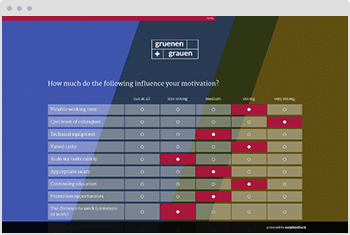
Employee Motivation Survey Template

Employee Motivation

Survey template details

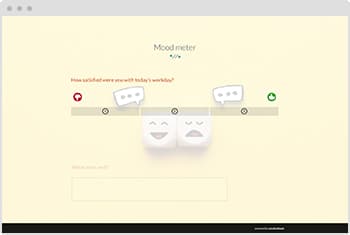
Survey template mood barometer

Mood Meter

Survey template details

Survey Template: Internal Communication

Internal Communication

Survey template details

Survey template: feedback employee onboarding

Employee Onboarding Feedback

Survey template details

Survey Template working environment

Workplace Atmosphere

Survey template details

Explore all survey templates  

You are in professional company

Immoscout 24 Logo
Tui Logo
Porsche Logo
Lufthansa Logo
Jaegermeister Logo

Over 740,000 participants in easyfeedback surveys every month

Result

STUDIO

The performance add-on for your analysis

easyfeedback Result Studio 2