
“Identifying user needs is at the heart of our business. easyfeedback has been helping us with this task for several years now. We particularly appreciate its intuitive usability and professional support.”

“We use easyfeedback for internal and external surveys—it’s fast, convenient, and easy! The uncomplicated and friendly support puts a smile on our faces, and we are delighted with the continuous development of the platform.”
A successful event starts with careful planning. But how can you ensure that your guests are truly satisfied and that their expectations are met?
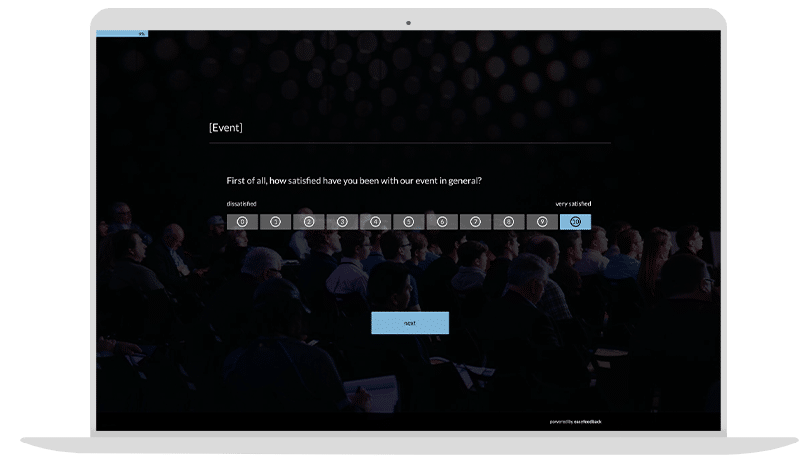
Our survey template gives you the opportunity to gather valuable event feedback from your participants early on.
Inform your guests, ask specific questions, and listen carefully — this will help you identify their wishes, needs, and suggestions for improvement.
By clarifying important details in advance, you lay the groundwork for an event that not only runs smoothly but also delights attendees.
Whether it’s about the content, the schedule, the catering, or technical requirements — your guests’ feedback provides clear guidance.
With these insights, you can optimize your event planning and tailor your event specifically to participants’ expectations.
This makes the organization process more relaxed, and you can be sure that your event will be a complete success. Guests who feel heard are happy to recommend your event to others!
Contents of the template:
Objectives of the survey:
Helpful features for the survey:

Data protection „made in Germany“ (GDPR)

Anonymity function for honest feedback
Event planning refers to the comprehensive process of organizing and delivering events.
It involves carefully planning, coordinating, and implementing numerous individual elements to ensure an event runs successfully and smoothly.
Key event-planning tasks include defining objectives, developing an event concept, budgeting, logistics, marketing, guest management, and follow-up activities.
The planning process usually begins by defining the objectives: What is the event intended to achieve?
For example, objectives may include increasing brand awareness, strengthening customer relationships, training employees, or celebrating a special occasion.
A suitable concept is then developed to define the event’s framework and content.
A key part of event planning is budgeting. This involves calculating and monitoring all costs—from the venue and technical equipment to catering and marketing activities—to maintain financial control.
Logistics ensures that all required resources, materials, and services are in the right place at the right time. This includes selecting and booking venues, preparing equipment and technical requirements, and coordinating service providers.
Another important aspect is marketing and communication to reach the target audience and generate enthusiasm for the event. This may include invitations, social media campaigns, public relations, or direct outreach.
Guest management ensures participants receive optimal support — from registration and admission through to assistance during the event. Catering, the supporting program, and guests’ special requests are also taken into account.
After the event, the follow-up phase begins.
This includes evaluating feedback, analyzing key performance indicators, and documenting the results. These insights are important for making future events even better.
Planning an event requires a structured approach to ensure that all aspects are well thought out and organized.
Here are the key steps for successful event planning:
Step 1: Define Objectives and Develop a Concept
Define the objectives of your event, such as brand presentation, networking, or professional development.
Develop a concept that specifies the type of event, the target audience, and the key message.
Step 2: Budgeting
Create a detailed budget that covers all expenses, including the venue, catering, technical equipment, marketing, and staff.
Also consider potential revenue, such as ticket sales or sponsorship.
Step 3: Set the Date and Venue
Choose a date and venue for your event. Consider availability, accessibility for participants, and the required facilities.
Ensure that the venue suits the size and type of event.
Step 4: Plan the Logistics
Organize all logistical aspects, such as catering, technical equipment (audio/video), transportation, decorations, and seating arrangements.
Ensure smooth delivery by clarifying all details in advance.
Step 5: Permits and Insurance
Clarify any legal requirements, such as permits or licenses required for your event.
Also check whether you need event insurance.
Step 6: Marketing and Promotion
Develop a marketing strategy to promote your event. Use channels such as social media, email marketing, posters, and flyers to reach your target audience.
Create an event website or event app if necessary.
Step 7: Registration and Sign-Ups
Evaluate the services provided by event partners, such as caterers, technical providers, or the venue, to ensure that you select high-quality service providers and can plan better in the future.
Step 8: Program Development
Plan the event schedule, including speakers, workshops, activities, and breaks.
Create a detailed timeline and coordinate everyone involved.
Step 9: Delivery and Management
On the day of the event, ensure careful delivery.
Coordinate all teams, monitor the schedule, and be prepared to respond to unexpected situations.
Step 10: Follow-Up and Evaluation
After the event, conduct a follow-up to evaluate its success.
Collect feedback from participants, analyze the results, and document all insights for future events.
Also review the financial results and whether the budget was met.
Step 11: Thank-You Notes and Follow-Up
Thank participants, speakers, and sponsors for their support.
Follow-up can also help maintain long-term relationships and promote future events.
Here is a comprehensive event planning checklist to ensure no important point is overlooked:
Timeframe: 6–12 Months Before the Event
1. Define Objectives
2. Budgeting
3. Date and Venue
4. Team and Responsibilities
5. Program Planning
6. Permits and Insurance
Timeframe: 3–6 Months Before the Event
1. Marketing and Promotion
2. Registration System
3. Contracts
4. Logistics Planning
5. Communication
Timeframe: 1–3 Months Before the Event
1. Participant Management
2. Rehearsals and Testing
3. Materials and Equipment
Timeframe: Week of the Event
1. Final Checks
2. Setup
3. Event Delivery
4. Guest Reception
Timeframe: After the Event
1. Collect Feedback
2. Debrief
3. Close-Out and Documentation
4. Thank You
Here are some helpful tips for successful event planning:
Tip 1: Define Objectives
Clarify the main objective of your event.
Whether it is networking, education, sales promotion, or entertainment, a clearly defined objective supports the entire planning process.
Tip 2: Budgeting
Create a detailed budget that covers all aspects of the event, from the venue and catering to technical equipment and marketing.
Also include contingency funds for unforeseen expenses.
Tip 3: Target Audience Analysis
Identify your target audience and its needs.
Tailor the event format, content, and activities to participants’ interests and expectations.
Tip 4: Choose the Venue
Select a suitable venue that matches the size and type of your event.
Consider the location, accessibility, facilities, and availability.
Tip 5: Schedule the Date
Set a date that is convenient for your target audience.
Consider holiday periods, public holidays, and other relevant events to avoid scheduling conflicts.
Tip 6: Develop the Program
Plan a varied, goal-oriented program.
Incorporate speakers, workshops, entertainment, and breaks effectively to maintain participants’ interest.
Tip 7: Assemble the Team
Put together an experienced team to handle different tasks—from logistics and marketing to guest support.
Tip 8: Marketing and Promotion
Develop an effective marketing strategy to raise awareness of your event.
Use social media, email marketing, flyers, and other channels to reach your target audience.
Tip 9: Registration and Tickets
Implement a simple and efficient registration system.
Consider whether you want to sell tickets or offer free registration.
Tip 10: Logistics Planning
Organize all logistical details, including catering, technical equipment (audio/video), transportation, and decorations.
Make sure that all required services are available reliably and on time.
Tip 11: Permits and Insurance
Obtain all required permits and licenses.
Check whether you need insurance to cover risks.
Tip 12: Communication
Maintain regular contact with your team, service providers, and participants.
Clear communication helps prevent misunderstandings and keeps everyone informed.
Tip 13: Rehearsals and Testing
Conduct rehearsals to ensure everything runs according to plan.
Test the technical setup, processes, and catering to identify potential issues early.
Tip 14: Collect Feedback
Plan ways to collect feedback, both during and after the event.
This helps you assess participant satisfaction and improve future events.
Tip 15: Follow-Up
Hold a debriefing with your team to evaluate the success of the event.
Analyze feedback, review budget compliance, and document insights for future events.
Delivering an event requires precise planning and efficient management to ensure everything runs smoothly.
Here are some helpful tips for successful event delivery:
Tip 1: Checklist and Schedule
Create a detailed checklist and schedule for the day of the event.
This helps you track all tasks and responsibilities and ensures that nothing is overlooked.
Tip 2: Communication
Make sure that all team members and service providers have clear instructions and know what is expected of them.
Provide regular updates and remain available throughout the event.
Tip 3: Use of Technology
Thoroughly check the technical setup before the event.
Test microphones, speakers, projectors, and other equipment to avoid technical issues.
Have a technician on site who can respond quickly if problems arise.
Tip 4: Guest Reception
Ensure a smooth welcome for guests.
Set up a registration desk, provide name badges, and offer assistance in finding seats or rooms.
Tip 5: Program Monitoring
Monitor the program closely and keep to the schedule.
Be flexible and prepared to make adjustments if delays or changes occur.
Tip 6: Hygiene and Safety
Pay attention to hygiene and safety measures, especially during public-health crises.
Provide hand sanitizer and ensure compliance with safety regulations.
Tip 7: Emergency Plan
Have an emergency plan for unexpected situations, such as technical failures, medical emergencies, or other issues.
Make sure all staff know how to respond in an emergency.
Tip 8: Catering
If you provide catering, check in advance that the delivery arrives on time and that the food meets expectations.
Also account for guests’ special dietary requirements or allergies.
Tip 9: Guest Feedback
Collect feedback from participants during or after the event to capture their experiences.
This can be done through surveys or simple feedback forms.
Tip 10: Decoration and Atmosphere
Ensure that the decorations and atmosphere reflect the planned style and theme of the event.
An appealing environment contributes significantly to a positive atmosphere.
Tip 11: Networking and Interaction
Encourage opportunities for networking and interaction among guests.
This can be done through dedicated activities, breaks, or networking sessions.
Tip 12: Follow-Up
After the event, hold a debriefing with your team to evaluate it.
Discuss what went well and where improvements are needed.
Tip 13: Thank You
Thank participants, speakers, and partners for their attendance and support.
A thank-you message or follow-up can help maintain positive relationships and support future events.
easyfeedback, as a survey tool, can provide valuable support in event management by helping you efficiently plan and optimize different aspects of your event.
Here are some ways easyfeedback can be useful in this context:
1. Identify Needs and Expectations
You can send surveys to potential participants to gather their wishes and expectations for the event.
This gives you insights into preferences for topics, dates, speakers, or event formats, allowing you to adapt your planning accordingly.
2. Feedback on Event Organization
Collect feedback on the organization and logistics of your event, such as the choice of venue, scheduling, or services provided.
This enables you to identify and address potential weaknesses early.
3. Participant Preferences
Learn more about participants’ specific interests to offer tailored content and activities.
For example, you can use surveys to identify preferences for workshops, breakout sessions, or networking opportunities.
4. Satisfaction Analysis
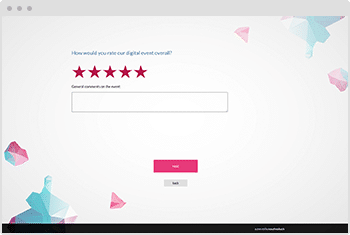
After the event, you can use easyfeedback to assess participant satisfaction.
Determine what went well and which areas can be improved to make future events even more successful.
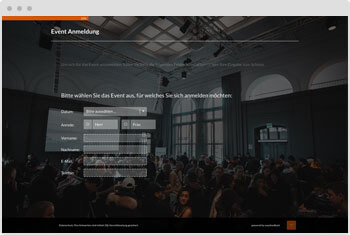
5. Registration and Sign-Ups
Use surveys to collect registrations and manage guest lists.
This simplifies organization and helps you keep track of participant numbers and their specific requirements.
6. Interactive Elements
Integrate surveys into your event app or website to collect real-time feedback and increase event interactivity.
This can also help increase engagement.
7. Evaluate Event Partners and Service Providers
Evaluate the performance of event partners, such as caterers, technical providers, or the venue, to ensure that you select high-quality service providers and can plan more effectively in the future.