
“Identifying user needs is at the heart of our business. easyfeedback has been helping us with this task for several years now. We particularly appreciate its intuitive usability and professional support.”

“We use easyfeedback for internal and external surveys—it’s fast, convenient, and easy! The uncomplicated and friendly support puts a smile on our faces, and we are delighted with the continuous development of the platform.”
It is not only the pandemic but also the numerous advantages that are driving the trend toward digital events and seminars.
The ability to hold events from anywhere and the savings on venue and catering costs associated with in-person events are making interactive online events increasingly popular.
Added to this are the reduced planning effort, more efficient execution, and the ability to flexibly scale the number of participants — all of which increase their appeal.
But regardless of whether it’s an in-person or online event, one thing remains essential: gathering feedback.
Only through feedback can you determine whether participants’ expectations were met and how the event can be further optimized.
This is how you create events that inspire and achieve lasting success.
Contents of the template:
Objectives of the survey:
Helpful features for the survey:

Data protection „made in Germany“ (GDPR)

Anonymity function for honest feedback
An online event is a virtual event that takes place entirely over the internet, enabling people to come together regardless of their geographical location.
The only requirement for participation is a stable internet connection, removing barriers such as travel time, costs, and physical distance.
Online events can take many forms, which vary greatly depending on their purpose and number of participants:
The main advantage of online events lies in their flexibility and extensive reach. They enable participation from anywhere in the world—whether from a home office, while traveling, or from another country.
This not only saves travel time and accommodation costs, but also enables a much larger and more diverse participant base.
In addition, online events promote new forms of collaboration and knowledge sharing. They offer interactive tools such as chats, virtual whiteboards, and breakout sessions, which strengthen communication and networking despite physical distance.
This makes learning, networking, and collaborative problem-solving location-independent, time-saving, and highly efficient.
Digital events offer a wide range of advantages, but also present some challenges.
Here are the key advantages and disadvantages:
Advantages
Advantage 1: Cost Savings
Advantage 2: Accessibility and Reach
Advantage 3: Flexibility and Convenience
Advantage 4: Environmental Friendliness
Advantage 5: Interactive Opportunities
Disadvantages
Disadvantage 1: Technical Challenges
Disadvantage 2: Less Personal Interaction
Disadvantage 3: Data Protection and Security
Disadvantage 4: Limited Experience Quality
A successful online event requires careful planning and organization.
Here is a detailed guide to ensure your event runs smoothly and provides a positive experience for all participants:
Step 1: Define Objectives and Plan
Step 2: Format and Structure
Step 3: Technical Platform
Step 4: Content and Speakers
Step 5: Marketing and Registration
Step 6: Preparation and Test Run
Step 7: Deliver the Event
Step 8: Follow-Up
Digital events can be a great way to connect people, share information, and encourage engagement.
Here are some tips for making digital events successful:
Tips: Planning and Preparation
Tips: Content and Interaction
Tips: Follow-Up
Tips: Creative Ideas
A checklist for a successful online event can help you remember all important details and ensure your event runs smoothly.
Here is a comprehensive checklist:
A. Before the Event
1. Planning and Concept:
2. Platform and Tools:
3. Speakers and Content:
4. Marketing and Communication:
5. Technical Check:
6. Participant Communication:
7. Preparation:
8. Delivery:
9. Follow-Up:
10. Analysis and Evaluation:
11. Follow-Up Actions:
Collecting feedback after a digital event is essential for several important reasons:
Reason 1: Quality Improvement
Reason 2: Participant Satisfaction
Reason 3: Engagement and Retention
Reason 4: Improve Content
Reason 5: Technical Optimization
Reason 6: Evaluate Success
Reason 7: Innovation and Creativity
Reason 8: Transparency and Trust
easyfeedback is primarily designed as a survey and feedback tool, but it can also support various aspects of planning and delivering online events.
Here are some specific ways easyfeedback can help:
Option 1: Before the Event
Participant Surveys
Agenda Feedback
Option 2: During the Event
Live Feedback
Participant Engagement
Option 3: After the Event
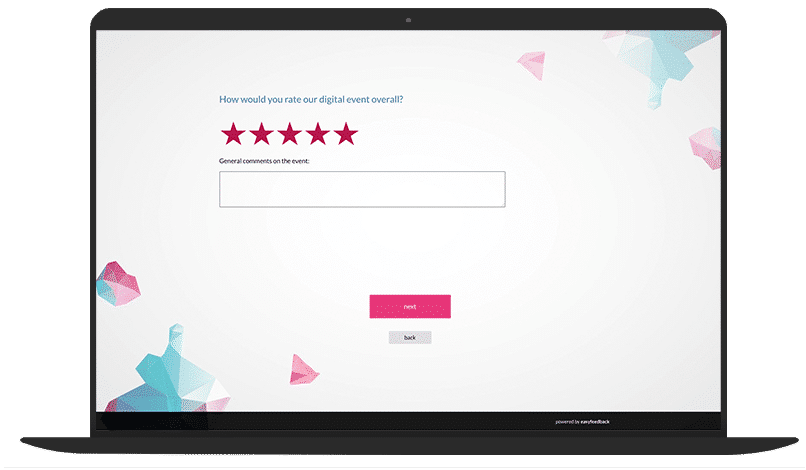
Collect Feedback
Data Analysis
Practical Implementation
Step 1: Create Surveys
Use easyfeedback’s interface to easily create surveys and forms.
Use different question types, such as multiple choice, rating scales, and open-ended questions.
Step 2: Integrate into Communication Channels
Share surveys and feedback forms via email, social media, or directly during the event through links.
Step 3: Management and Automation
Automate reminders for feedback surveys and manage participant responses efficiently through the easyfeedback dashboard.
Step 4: Data Protection and Security
Ensure that collected data is stored and processed securely to meet data protection requirements.