

“Identifying user needs is at the heart of our business. easyfeedback has been helping us with this task for several years now. We particularly appreciate its intuitive usability and professional support.”

“We use easyfeedback for internal and external surveys—it’s fast, convenient, and easy! The uncomplicated and friendly support puts a smile on our faces, and we are delighted with the continuous development of the platform.”
A well-planned event is the key to success.
But how do you gather the information needed for efficient event planning?
It’s simple: Get feedback directly from your expected attendees using an online form.
Guests often have specific expectations and are willing to share them.
With a well-designed form, you can identify their preferences early on and address their needs effectively.
Planning a successful event starts with a clear understanding of expectations.
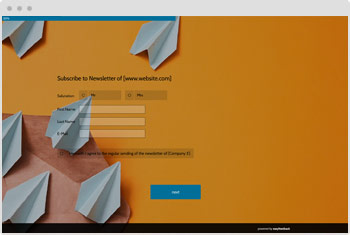
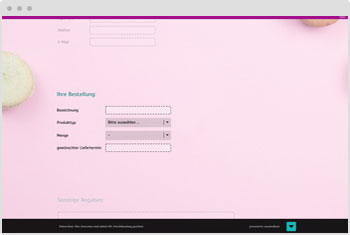
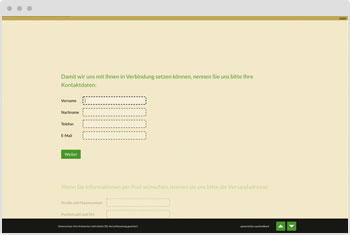
Try out our registration form template and gather valuable information for your next event.
This makes event coordination much more relaxed, since you’ll know in advance what your attendees want.
Contents of the template:
Objectives of the survey:
Helpful features for the survey:

Data protection „made in Germany“ (GDPR)

Anonymity function for honest feedback
A registration form is a structured template used to collect relevant information from individuals who wish to register for an event, seminar, course, or other organized activity.
It forms the basis for participant management and enables the systematic planning and delivery of the respective event.
Typically, a registration form requests basic personal information – including:
Depending on the nature of the event or organizational requirements, additional information may also be required, such as:
Paper-based registration forms are traditionally completed in printed form.
This option is often used for events with in-person registration or in contexts without digital access.
The completed form is either submitted directly on site or sent by post.
Digital registration forms are becoming increasingly important. They can be provided via websites, online forms, registration platforms, or email.
The benefits of digital forms are clear:
A registration form is a text template used to request information such as a name, telephone number, email address, postal address, date of birth, or other relevant details from a person participating in an event.
These forms are used to collect important participant details, enabling them to take part in an event or use specific services.
Registration forms are available in paper-based or digital formats.
Paper-based registration forms are provided in printed form and completed by participants by hand.
They are often used at local events, in stores, or in public institutions.
Digital registration forms, on the other hand, allow participants to enter their information online via websites, dedicated registration platforms, or mobile applications.
These forms often offer the advantage of faster and more efficient data processing, as information is collected directly in electronic form.
Regardless of its format, a registration form is an important tool for organizing events, collecting relevant participant information, and managing services or offers.
It enables organizers to communicate effectively with participants, create participant lists, and collect all necessary details for the smooth running of an event.
Digital registration forms can be used for all types of events, including conferences, trade fairs, corporate events, seminars, webinars, and workshops.
They can also be used, for example, for newsletter sign-ups or promotional giveaways.
The versatility of digital registration forms makes them a practical tool for companies and organizations to simplify and manage registration and participation in a wide range of activities.
For conferences and trade fairs, digital registration forms enable the efficient collection of participant data and facilitate event organization and planning.
For corporate events, they can be used to register employees and collect relevant information.
For seminars and workshops, digital registration forms simplify participant registration and allow organizers to track important details such as the number of participants and their preferences.
In addition, digital registration forms can be used for marketing purposes, for example, for newsletter sign-ups that add interested parties directly to a mailing list.
They are also a common choice for promotional giveaways, where participants can submit their details to enter a competition or prize draw.
This flexibility makes digital registration forms an indispensable tool for organizing and managing events and marketing activities.
Below, we have compiled some tips for creating and designing an online registration form:
It always depends on the type of event and the information you need for registration.
For example, if you are hosting a webinar, it makes sense to ask for the participant’s name and email address.
You can use the email addresses to send registered participants their webinar invitation.
If the webinar is a commercial event aimed at professional participants, you could also ask for the participant’s company and job title in addition to their name and email address.
For example, this information can help you define your webinar’s target audience more precisely over time and make marketing easier.
You could also ask in the registration form how the participant found out about your webinar.
This enables you to focus your sales and marketing activities more effectively for your next webinar and generate more registrations.
As you can see, the data you request from participants when they register for your event always depends on the type of event.
The important thing is to keep the registration form as short as possible and ask only for the information you need.
It’s very simple. You only need a few steps:
That’s it.
Can I connect the online registration form with other tools?
Yes, you can. Online registration forms created with easyfeedback can be connected via the Zapier web application to more than 5,000 popular apps, including CRM, marketing, office, and other tools. In addition to easyfeedback, you will need a Zapier account.
You can then create automated workflows in Zapier to start transferring data from your form and trigger possible follow-up actions.
You can find more information about the options for integrating easyfeedback with other tools here.
What can I customize in the online registration form sample template?
You can customize everything in our sample template to suit your needs.
Replace questions or add new ones, adapt the registration form template’s layout to match the colors and fonts of your corporate identity, for example, or redirect the completion page to an external page of your choice.
Our sample templates serve as inspiration and demonstrate the possibilities for designing an online registration form with easyfeedback.
There are no limits to your creativity.
Are online registration forms with easyfeedback GDPR-compliant?
Yes, they are. Registration forms created with easyfeedback are data protection compliant.
Not only do we offer the option of designing GDPR-compliant registration forms, for example with a customized privacy notice and a consent checkbox, but collecting the required data for your digital registration form is also always data protection compliant with easyfeedback.
Thanks to our technical measures, such as data encryption and ISO 27001 certification for our German servers, we also offer maximum security for survey participation.
You can rely on our data protection practices.
Would you like to learn more? Click here.