

“Identifying user needs is at the heart of our business. easyfeedback has been helping us with this task for several years now. We particularly appreciate its intuitive usability and professional support.”

“We use easyfeedback for internal and external surveys—it’s fast, convenient, and easy! The uncomplicated and friendly support puts a smile on our faces, and we are delighted with the continuous development of the platform.”
A positive atmosphere in the workplace and satisfied employees are the foundation of a strong employer image.
A short employee survey will give you valuable insights into key aspects:
These insights give you a clear picture of how well your corporate values are lived out in everyday life.
A targeted survey on employer attractiveness will help you strengthen and continuously develop your employer brand.
Become the employer everyone wants to work for—create an environment that motivates and satisfies your employees, and ensure a positive perception in the market!
Contents of the template:
Objectives of the survey:
Helpful features for the survey:

Data protection „made in Germany“ (GDPR)

Anonymity function for honest feedback
Employer attractiveness refers to the ability of a company to attract, retain, and motivate qualified employees.
It includes all aspects that make a company attractive to potential and current employees, including its company culture, working conditions, compensation, career development opportunities, and work environment.
A high level of employer attractiveness helps companies attract and retain talented employees, increase productivity, and improve employee satisfaction.
Companies that position themselves as attractive employers in the labor market through a strong employer brand can find suitable candidates for open positions more easily. This represents a major advantage, especially in industries facing a shortage of skilled workers.
By maintaining a high level of employer attractiveness, companies remain competitive in the “war for talent”, meaning the competition for young and highly qualified professionals.
In addition, companies can retain their existing employees by increasing motivation and satisfaction. This helps them avoid high employee turnover and reduce associated costs.
Satisfied employees are also more productive, take fewer sick days, and enjoy their work more — which ultimately benefits the company as well.
A strengthened employer brand also has a positive impact on employer branding, which in turn enhances the company’s reputation and image both internally and externally.
A positive employer image can help increase the interest of potential applicants and attract talents who align with the company’s values and goals.
Furthermore, companies perceived as attractive employers are better equipped to respond to changes in the labor market and successfully position themselves in the competition for top talent.
The connection between employer attractiveness and employer branding is closely linked and can be seen as mutually reinforcing.
Employer attractiveness refers to how attractive a company is perceived as an employer by potential and current employees.
It includes creating a positive working environment, offering attractive working conditions, providing development opportunities, and fostering a supportive company culture.
Employer branding, on the other hand, refers to the strategic measures and activities a company undertakes to shape and communicate its image as an employer.
It includes developing a unique employer brand that reflects the company’s identity, values, and culture and is specifically designed to attract potential candidates and retain existing employees.
The connection between employer attractiveness and employer branding lies in the fact that a strong employer brand increases a company’s attractiveness as an employer.
When a company is recognized as an attractive employer, it is more likely to be noticed by talented candidates and has access to a larger pool of qualified applicants for open positions.
This, in turn, helps the company strengthen its position as an employer and increase its competitiveness in the labor market.
Conversely, successful employer branding can help increase employer attractiveness by promoting the company’s image and reputation as an attractive employer.
By developing and actively communicating its unique employer brand, a company can attract the interest of potential candidates, strengthen employee identification with the organization, and motivate existing employees to remain with the company in the long term.
The goals of employer attractiveness are diverse and aim to position a company as an attractive employer while promoting employee satisfaction and loyalty.
Here are some of the most important goals:
1. Goal: Attracting talent
One of the main goals of employer attractiveness is to attract qualified and talented employees who not only possess the required skills and qualifications but are also motivated to contribute to achieving the company’s goals.
Such employees can make a significant contribution to a company’s innovation capabilities, productivity, and competitiveness.
By attracting top talent, a company can increase its performance level and strengthen its position in the market.
The goal is therefore not simply to hire employees, but to attract the right people who can contribute to the company’s success through their expertise, commitment, and dedication.
2. Goal: Retaining employees
Employer attractiveness aims to retain existing employees in the long term and reduce employee turnover.
Low employee turnover is crucial for companies because high staff turnover is not only associated with significant costs, but can also result in a loss of knowledge and experience.
By providing attractive working conditions, development opportunities, and a supportive work environment, companies can motivate employees to remain with the organization in the long term.
Strong employee retention not only creates greater continuity within teams but also contributes to the stability and success of the company by fostering a positive working environment and a trusting relationship between employees and managers.
3. Goal: Increasing employee satisfaction
Another goal of employer attractiveness is to create a positive work environment where employees feel valued and motivated while also being able to reach their full potential.
A positive work environment includes various aspects, such as open communication, respectful collaboration, opportunities for personal and professional development, a balanced work-life balance, and recognition and appreciation of employees’ achievements.
By creating a supportive and encouraging workplace, companies can increase employee engagement and employee satisfaction, improve productivity, and positively influence the overall working atmosphere.
Such a positive environment not only encourages employees to enjoy their work but also helps them build a long-term connection with the company and give their best to contribute to organizational success.
4. Goal: Improving the company image
A positive perception as an attractive employer can significantly strengthen the company’s image and reputation.
A company known for employee-friendly practices, attractive working conditions, and a supportive company culture not only attracts talented applicants but can also gain the trust of customers, investors, and business partners.
A positive employer image demonstrates that the company cares about the well-being of its employees, which strengthens trust in the brand and increases customer loyalty.
Furthermore, an attractive reputation as an employer can help the company become the preferred choice for qualified candidates, making talent acquisition easier and improving the quality of applicants.
A strong employer image is therefore an important factor for the long-term success and competitiveness of a company, as it strengthens stakeholder trust and supports the development of a positive organizational culture.
5. Goal: Promoting company culture
Employer attractiveness contributes to the development of a positive company culture characterized by collaboration, innovation, and engagement.
A positive company culture is essential for the well-being of employees and the success of the organization. By fostering a culture based on trust, respect, and openness, companies create an environment where employees enjoy working and actively support one another.
Such a culture promotes collaboration among employees and enables them to work together on projects and develop innovative solutions.
In addition, a positive company culture encourages employees to actively contribute, share their ideas, and pursue personal development.
This not only contributes to employee satisfaction and motivation but can also help the company become more agile and adaptable in responding to constantly changing market demands.
6. Goal: Increasing competitiveness
Companies recognized as attractive employers gain a competitive advantage in attracting talent and can differentiate themselves in the market.
A strong employer brand not only attracts qualified candidates but also allows a company to choose from a larger pool of talent.
When potential employees perceive a company as attractive and desirable, they are more likely to apply and build a long-term relationship with the organization.
This enables companies to attract highly qualified employees who possess the necessary skills and expertise to contribute to business success.
Furthermore, a strong employer brand can help a company stand out in the market and differentiate itself from competitors.
When a company is recognized as an attractive employer, it can become regarded as a preferred employer within its industry.
This can have a positive impact on the company’s image and reputation and contribute to how positively it is perceived by customers, investors, and business partners.
There are various theories and approaches that focus on employer attractiveness and explain why certain companies are perceived as attractive employers.
These theories provide different perspectives and approaches for explaining employer attractiveness and support companies in developing their employee recruitment and retention strategies.
The following section presents some of the most prominent theories:
1. Theory: Employer Branding
This theory states that companies can strategically develop their employer brand in order to position themselves as attractive employers.
Through clear and positive communication of their values, culture, and benefits, companies can attract the interest of qualified candidates and increase employee engagement.
2. Theory: Person-Organization Fit
This theory suggests that employees are attracted to companies that match their personal values, needs, and goals.
Companies that provide a culture and working environment that fits well with the individual profile of their employees are therefore perceived as more attractive.
3. Theory: Psychological Contract
According to this theory, there is an implicit contract between employers and employees that defines the expectations and obligations of both sides.
Companies that fulfill this contract and provide employees with security, fairness, and development opportunities are perceived as attractive employers.
4. Theory: Social Identity Theory
This theory states that people identify with organizations that provide them with a positive social self-image.
Companies that promote a strong company culture and foster a strong sense of community are therefore perceived as attractive employers.
5. Theory: Expectancy-Value Theory
This theory from motivational psychology states that employees are attracted to companies that they expect will fulfill their individual needs and provide positive rewards.
Companies that offer attractive working conditions, development opportunities, and compensation packages are therefore considered attractive employers.
To increase employer attractiveness, companies can implement various measures:
1. Measure: Strengthening the company culture
A positive and supportive company culture can help retain employees and build a strong connection between employees and the organization.
This can be achieved through clear corporate values, open communication, and opportunities for employee participation.
For example, companies can organize regular employee events or team-building activities to strengthen collaboration and promote a sense of community.
In addition, transparent decision-making processes and an open feedback culture can help strengthen employee trust and increase satisfaction.
Giving employees the opportunity to actively participate in decisions and contribute their ideas shows that their contribution is valued and strengthens their engagement with the company.
2. Measure: Attractive compensation and benefits packages
Competitive salaries and benefits are essential for attracting talented employees and retaining them in the long term.
In addition to an attractive base salary, additional benefits such as flexible working hours, remote working options, company pension plans, health and wellness programs, and professional development opportunities can make a significant contribution to employee satisfaction and retention.
Flexible working hours allow employees to adapt their work to their personal needs and achieve a better work-life balance.
Remote working opportunities provide additional flexibility and can help reduce commuting stress while increasing productivity.
Company pension plans are an attractive benefit and demonstrate the company’s long-term commitment to employee well-being.
Professional development opportunities enable employees to expand their skills and knowledge and advance their careers, benefiting both employees and the company.
By providing these benefits, companies can not only attract talented employees but also strengthen their motivation, productivity, and long-term commitment to the organization.
3. Measure: Career opportunities and development prospects
Opportunities for professional development and advancement within the company are key factors for employee satisfaction and retention.
Employees value being able to develop their skills and careers without having to leave the organization. Companies can meet these needs by providing training programs, mentoring initiatives, and clear career paths.
Training programs enable employees to expand their skills and knowledge, both in their current roles and for future career opportunities.
Mentoring programs provide employees with the opportunity to learn from experienced colleagues and develop personally and professionally.
In addition, clear career planning is important so that employees can define their professional goals and actively work toward achieving them.
This can be achieved through regular career discussions, performance reviews, and the identification of development opportunities within the company.
4. Measure: Creating a positive work environment
A pleasant working environment with modern office facilities, a balanced work atmosphere, and a healthy work-life balance is essential for motivating employees and increasing productivity.
Modern office facilities, such as ergonomic furniture, advanced technologies, and an appealing workplace design, create an environment where employees feel comfortable and can work efficiently.
A balanced work environment characterized by mutual respect, teamwork, and open communication promotes a positive workplace and contributes to employee satisfaction.
A healthy work-life balance enables employees to combine their professional and private lives, resulting in a better quality of life and increased motivation at work.
5. Measure: Employer branding
A strong employer brand can help position a company as an attractive employer and attract talented candidates.
This can be achieved through targeted marketing and communication activities as well as a positive presence on social media.
A well-developed employer branding strategy that authentically communicates the company’s values, culture, and benefits helps generate interest among potential applicants and differentiates the company from competitors.
Through targeted employer branding, companies can strengthen their employer brand and create a positive perception as an attractive employer among their target audience.
This can include the use of social media platforms, targeted advertisements, and participation in career fairs and recruitment events.
A positive social media presence, authentic employee testimonials, and insights into company life help attract potential applicants and strengthen the employer brand.
6. Measure: Collecting and implementing employee feedback
Collecting regular employee feedback and implementing improvement suggestions can help increase job satisfaction, strengthen employee retention, and improve employer attractiveness.
Employee feedback is a valuable tool for understanding the needs and concerns of the workforce and responding to them effectively.
Through regular employee surveys, feedback discussions, or anonymous feedback channels, companies gain insights into employee sentiment and workplace challenges.
The consistent implementation of improvement suggestions signals to employees that their opinions are heard and taken seriously, which strengthens trust in company leadership and promotes employee retention.
By communicating transparently how they respond to employee feedback and which measures they implement, companies demonstrate their commitment to a positive work environment and strengthen their image as an attractive employer.
Through this iterative process of continuous improvement, companies can strengthen their employer brand and establish themselves as an attractive employer in the long term.
Through regular employee surveys or personal conversations, you can easily assess the current subjective mood of your employees, identify potential problems, wishes, and suggestions, and gather insights at various stages of the employee journey.
For example, you can already ask about the reasons behind a candidate’s interest in your company during the application form, which can be conducted in the form of a questionnaire, or during the interview itself.
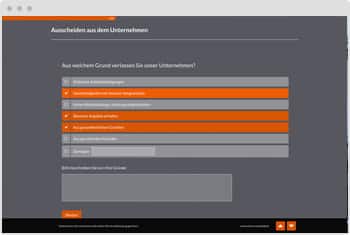
If an employee decides to leave the company, you can also use an exit interview to identify the possible reasons behind their decision.
In addition, exit interviews provide valuable insights into the reasons why employees leave the organization.
Through open and respectful conversations during this process, you can identify potential issues or areas for improvement in order to achieve higher employee retention and satisfaction in the future.
This enables you to implement targeted employee retention measures and develop long-term solutions for existing challenges.
In addition to these direct conversations, you can also use other indicators to measure employer attractiveness, such as the employee turnover rate or feedback on review platforms such as Glassdoor or Kununu.
By considering these different factors, you gain a comprehensive understanding of how attractive your company is perceived as an employer and can implement targeted measures to improve your employer branding strategy.
Various key metrics can be used to measure employer attractiveness, providing insights into how a company is perceived and how appealing it is as an employer.
Below are some of the most important metrics for evaluating employer attractiveness:
1. Metric: Number of Applications
The number of applications received per job opening can be an indicator of how attractive the company is to potential candidates.
A high number of applications suggests that the company has a strong employer brand and is perceived as an attractive place to work.
2. Metric: Candidate Quality
The quality of applicants, measured by their qualifications, experience, and skills, is another important indicator of employer attractiveness.
Highly qualified candidates demonstrate that the company is capable of attracting talented professionals who are a good fit for the organization.
3. Metric: Employee Turnover Rate
The employee turnover rate indicates how many employees leave the company over a given period.
A low turnover rate suggests that employees are satisfied with their workplace and are motivated to stay with the company long term. This is often a strong indicator of high employer attractiveness.
4. Metric: Employee Net Promoter Score (eNPS)
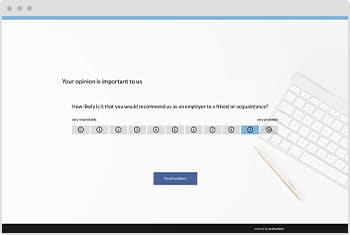
The Employee Net Promoter Score (eNPS) measures employees’ willingness to recommend the company as an employer.
A high eNPS indicates that employees have a positive relationship with the organization, are proud to work there, and would recommend it to potential candidates.
5. Metric: Compensation and Benefits
The competitiveness of a company’s salaries and benefits packages compared to other organizations in the industry is another key indicator of employer attractiveness.
Companies that offer competitive compensation and attractive benefits, such as bonuses, retirement plans, health benefits, or other employee perks, are generally perceived as more attractive employers.
6. Metric: Employer Rankings and Awards
A company’s position in employer rankings or recognition through employer awards can also be used to evaluate employer attractiveness.
Organizations that consistently appear in well-known employer rankings or receive awards for their workplace culture and employee experience are often regarded as highly attractive employers.
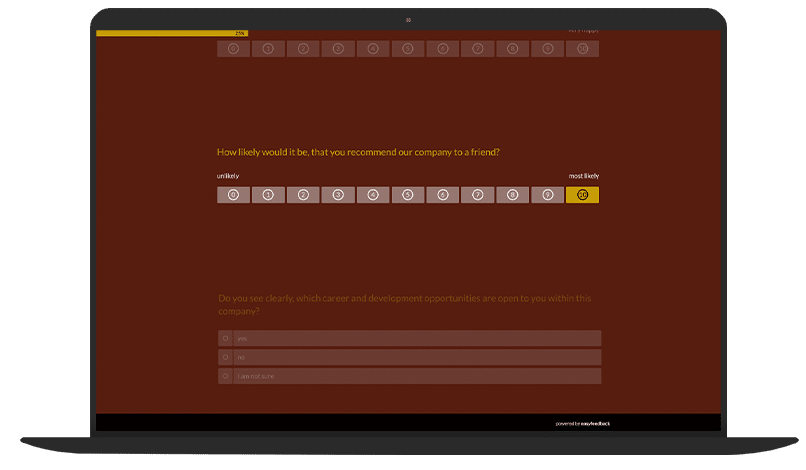
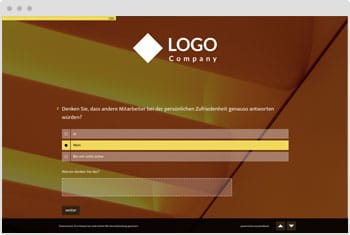
Since every company is unique, there is no standardized questionnaire for measuring employer attractiveness that is suitable for every organization.
However, you can use the following questions as a guide when creating your own questionnaire:
Internal company questions regarding the employer brand
External company questions regarding the employer brand
Should the questionnaire for measuring employer attractiveness be conducted anonymously or personally?
We generally recommend conducting employee surveys anonymously. There are several reasons for this:
Employee participation is usually higher when employees do not feel that their answers can be traced back to them or that they could face negative consequences as a result.
Anonymity increases trust in the survey process and leads to a key benefit: more honest and meaningful responses. This is essential when measuring your employer brand and improving it through targeted actions.
Only when you understand what employees dislike about your company or what they need to increase motivation and engagement can you implement effective measures to create positive change.
Another important aspect is the involvement of an existing works council within the company. A works council is generally more likely to approve an employee survey if participation is anonymous, as this helps protect employees and ensures the confidentiality of their responses.
If you decide to strengthen your attractiveness as an employer by using surveys to attract new talent, reduce employee turnover, and increase employee retention, the following process can help you conduct the survey successfully:
Step 1: Define objectives
Before starting the survey project, the first step is to define the objective of the initiative.
Simply defining the goal as “increasing employer attractiveness” is not sufficient, as this is too vague and broad. The objective should be defined in more detail.
For example, if your goal is to strengthen your employer brand in order to positively influence employee retention, the questionnaire and the included questions need to be designed differently than if your goal is to improve your ability to attract new talent and employees in the “War for Talents”.
Therefore, the objective shapes the questionnaire!
A clearly defined goal helps you to sharpen the focus of your employee survey and ensure that you collect relevant information that supports you in achieving your objectives.
It also allows you to better measure the effectiveness of your employer attractiveness initiatives and make adjustments where necessary.
Step 2: Define the framework conditions
Once the objective of the survey project has been established, the next step is to define the framework conditions.
Questions such as:
should be clarified during this phase, as they are important for the creation and organizational execution of the survey.
Only after these framework conditions have been defined should you begin developing and designing the questionnaire.
The selection of the right survey format and definition of the target group are crucial factors for the success of your employee survey.
Depending on the objective and target audience, different survey methods such as online surveys, personal interviews, focus groups, or paper-based questionnaires may be suitable.
The decision whether the survey should be personalized or anonymous depends on various factors, such as the sensitivity of the questions, the level of trust between employees and the company, and the desired openness and honesty of the responses.
It is important to identify potential obstacles early and develop appropriate solutions to ensure that the survey can be conducted successfully.
This may include providing sufficient resources, addressing data protection concerns, or ensuring an appropriate participation rate.
Step 3: Create the questionnaire
Once the objectives and framework conditions have been clarified, the next step is to design the questionnaire and develop suitable questions to measure the current level of employer attractiveness and identify opportunities for improvement.
An introduction, main section, and conclusion provide a good basic structure for the questionnaire.
Create topic sections for your questions that address specific aspects of employer attractiveness and use simple wording and question types that are not overly complex and allow participants to answer quickly.
An appealing design and the length of the questionnaire are also important factors that significantly influence the success of the survey.
Step 4: Conduct the survey
After creating and successfully pre-testing the questionnaire, the next step is conducting the survey.
This means informing participants in advance about the purpose and the potential benefits of participating, inviting them to complete the questionnaire, and encouraging participation.
However, conducting a survey involves more than simply informing and inviting participants.
Throughout the survey period, and especially at the beginning, you should monitor how many people have already participated, the dropout rate when using online questionnaires, and where most participants stop completing the survey.
The implementation phase is also about identifying whether there are any issues while answering the questionnaire, for example because questions are unclear or response options do not adequately match the questions.
The length of the questionnaire can also become a challenge.
If difficulties occur during the survey process, adjustments should be made at an early stage.
This is more difficult with paper-based surveys, but digital questionnaires can be adapted immediately.
Step 5: Analyze feedback
Once the survey period has ended and enough participants have taken part, the next step is to analyze the employee feedback collected.
Using charts, filters, and comparisons, you should try to identify similarities and differences between departments and employees. For open-ended questions, it is especially important to carefully analyze the underlying messages.
A detailed analysis of the results enables you to identify trends and determine which aspects of employer attractiveness are particularly valued or where improvements are needed.
It is important to consider not only quantitative but also qualitative data in order to gain a comprehensive understanding.
Open comments and suggestions from employees can provide valuable insights that should be included in the overall evaluation.
A thorough analysis allows you to establish a foundation for defining suitable measures to strengthen your employer brand and implement targeted improvements in areas considered particularly important by employees.
Step 6: Repeat the survey
Questionnaire completed, feedback analyzed, measures implemented — and now is the employer branding project finished?
No. At this point, you should evaluate the effectiveness of the implemented measures. The best way to do this is through further feedback.
It is important to remember that improving employer attractiveness is not a quick, one-time process.
Only continuity and continuous improvement through ongoing feedback will lead to a higher level of employer attractiveness in the long term.
This can be achieved by establishing a strong feedback culture within the company — not only to improve employer attractiveness but also for many other topics, such as improving internal communication or identifying employee training needs.
Therefore, it is essential to regularly review whether the implemented measures are achieving the desired results and whether further adjustments or additions are required to remain successful in the long term.