

“Identifying user needs is at the heart of our business. easyfeedback has been helping us with this task for several years now. We particularly appreciate its intuitive usability and professional support.”

“We use easyfeedback for internal and external surveys—it’s fast, convenient, and easy! The uncomplicated and friendly support puts a smile on our faces, and we are delighted with the continuous development of the platform.”
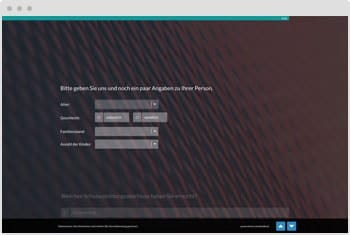
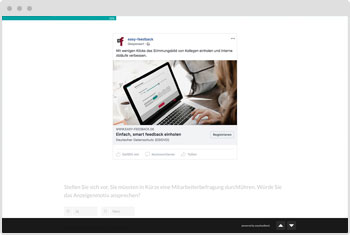
The new prototype is complete and ready to be unveiled.
But before it hits the market, it’s crucial to gauge potential customers’ willingness to buy and their level of interest.
A market research survey offers an ideal way to understand how the product is perceived and how well it meets the target audience’s expectations.
By asking targeted questions, you can gather valuable feedback that helps you identify potential weaknesses early on and adjust the product if necessary.
Customers appreciate the chance to express their opinions on new products, and their responses can provide important insights for final product development.
By conducting these surveys prior to launch, you can ensure that the product is optimally tailored to the needs of the target audience.
On this basis, you can maximize the chances of a successful launch, as you can identify potential problems early on and make targeted improvements.
Contents of the template:
Objectives of the survey:
Helpful features for the survey:

Data protection „made in Germany“ (GDPR)

Anonymity function for honest feedback
A product launch refers to the strategic and operational process through which a new product is introduced to the market for the first time.
It is a crucial step in a product’s life cycle and represents the bridge between development and commercial distribution.
At its core, a product launch includes all activities needed to make the product known to a defined target audience, generate interest, and ultimately encourage purchase or use.
It is not only about physically making the product available, but about a holistic approach that coordinates different areas of the company.
These include, among other things:
A successful product launch therefore requires careful planning and collaboration among different business areas.
Only when all components—from product quality and customer engagement to availability — are optimally aligned can the product establish itself sustainably in the market and generate growth.
The successful launch of a product depends on numerous factors.
Here are the key success factors to consider:
Factor 1: Market Research and Needs Analysis
Factor 2: Unique Value Proposition (USP)
Factor 3: Product Quality and Design
Factor 4: Effective Marketing
Factor 5: Strong Sales and Distribution
Factor 6: Pricing Strategy
Factor 7: Customer Support and Service
Factor 8: Go-to-Market Strategy
Factor 9: Continuous Feedback and Adaptation
Factor 10: Internal Engagement and Communication
Factor 11: Legal and Regulatory Compliance
Factor 12: Financial Planning and Control
The process of launching a product requires careful planning and coordination of various activities to ensure the product is introduced to the market successfully.
Here is a detailed product launch plan:
Phase 1: Preparation
a. Market Analysis and Planning
b. Product Development
Phase 2: Planning
a. Marketing and Sales Strategy
b. Communication and Promotion Plan
Phase 3: Implementation
a. Production and Logistics
b. Marketing and Sales
Phase 4: Launch
a. Pre-Launch Activities
b. Launch Event
Phase 5: Post-Launch
a. Sales and Distribution
b. Marketing and Communication
Phase 6: Sustainability
a. Customer Care and Support
b. Long-Term Strategies
Phase 7: Evaluation and Learning
a. Measure Success
b. Lessons Learned
Strategies for product launches are crucial for successfully bringing a new product to market and maximizing market acceptance.
Here are some proven strategies for an effective product launch:
Strategy 1: Market Research and Target Audience Analysis
Strategy 2: Clear Positioning and USP (Unique Selling Proposition)
Strategy 3: Integrated Marketing Communication
Strategy 4: Launch Event and Promotion
Strategy 5: Sales Strategy and Partnerships
Strategy 6: Customer Feedback and Iteration
Strategy 7: Long-Term Brand Building and Support
Product launch measures include a range of strategic steps for successfully bringing a new product to market.
Here are some key measures:
Measure 1: Market Research and Target Audience Analysis
Measure 2: Product Positioning and Messaging Development
Measure 3: Marketing Strategy and Planning
Measure 4: Sales Strategy and Distribution
Measure 5: Communication and Public Relations
Measure 6: Sales Promotion and Customer Retention
Measure 7: Monitoring and Adaptation
A product launch checklist helps ensure that all necessary steps and considerations are addressed to bring a product to market successfully.
Here is a comprehensive checklist:
Item 1: Market Research and Product Planning
Item 2: Financial Planning
Item 3: Production Planning
Item 4: Logistics and Sales
Item 5: Marketing and Public Relations
Item 6: Sales Preparation
Item 7: Legal Considerations
Item 8: Internal Communication
Item 9: Market Launch
Item 10: After the Launch
A product launch analysis is a structured approach to evaluating the success or failure of introducing a new product.
It involves examining and assessing different aspects of the process in order to gain valuable insights and optimize future product launches.
Here is a comprehensive guide to conducting a product launch analysis:
Step 1: Define Objectives and Success Metrics
Step 2: Market Analysis
Step 3: Product Evaluation
Step 4: Marketing and Communication Analysis
Step 5: Sales and Distribution Analysis
Step 6: Financial Analysis
Step 7: Customer Feedback and Retention
Step 8: Internal Processes and Communication
Step 9: Sustainability and Social Responsibility
Step 10: Conclusions and Recommendations
A potential analysis for a product launch involves evaluating various aspects to assess the success potential of a new product.
Here are some key areas that are typically included in a potential analysis:
Area 1: Market Demand and Target Audience Needs
Area 2: Competitive Environment
Area 3: Product Features and USP (Unique Selling Proposition)
Area 4: Market Potential and Revenue Forecasts
Area 5: Technical and Operational Feasibility
Area 6: Legal and Regulatory Requirements
A detailed marketing plan for a product launch is essential for successfully bringing a new product to market.
Here is a comprehensive guide to creating a product launch marketing plan:
Item 1: Executive Summary
Item 2: Market Analysis
Item 3: SWOT Analysis
Item 4: Marketing Objectives
Item 5: Target Audience Strategy
Item 6: Product Strategy
Item 7: Pricing Strategy
Item 8: Distribution Strategy
Item 9: Communication Strategy
Item 10: Promotion Strategy
Item 11: Sales Enablement
Item 12: Budget Planning
Item 13: Timeline
Item 14: Control and Measurement